When someone asks ChatGPT "What's the best CRM for startups?" or tells Perplexity "Find me an SEO copywriter," the AI doesn't show ten blue links. It delivers one answer with three to seven citations. AEO is how you become one of those citations.
AEO is the practice of structuring content so AI systems extract, trust, and cite it as the direct answer. 60% of US/EU searches produce zero clicks due to AI Overviews. 44.2% of ChatGPT citations come from the first 30% of a page. The 7-step playbook: write answer-first content, use question-shaped headings, add verifiable data points, implement schema markup, build self-contained passages (134-167 words), cite your own sources, and keep content fresh (3.2x more citations on Perplexity for recent content). Results typically appear within 2-6 weeks.
Traditional SEO gets your page to rank in Google's search results. Answer Engine Optimization gets your content selected as the answer that AI delivers before those results even appear. The shift is happening now. 60% of US and EU searches produce zero clicks because of AI Overviews. Click-through to the top result falls from 15% to 8% when an AI Overview appears above it, a 46.7% drop (Pew Research, March 2025).
You're not competing for position one anymore. You're competing for the single slot that an AI system fills when it answers a question about your category. If your content isn't structured to be extractable, trustworthy, and citable, you lose that slot to a competitor who invested in AEO.
Answer Engine Optimization ensures your content gets pulled, synthesized, and cited by AI systems like ChatGPT, Perplexity, Google AI Overviews, Claude, and voice assistants. Instead of optimizing for clicks, you optimize for inclusion in the answer itself. Teams that invest in AEO services early treat answer share like rank tracking. An answer engine optimization agency runs that program end to end when you do not want to staff it in house.
Businesses that optimize for AI Overviews report 2.4x higher conversion rates from AI-referred traffic compared to traditional organic visitors. The traffic volume is lower but the intent is dramatically higher (Ahrefs, 2025). Every citation you earn is worth more than a top-10 organic ranking.
What Is Answer Engine Optimization (AEO)?
Answer Engine Optimization is the practice of structuring content so AI systems extract, trust, and cite it as the direct answer to user questions.
It focuses on making information easy for machines to interpret, not just humans to read.
Think of it this way. SEO helps search engines find your page. AEO helps AI systems understand what your page means and select it as the answer. If SEO is about being found, AEO is about being chosen.
AEO began around 2014-2016 as Google added featured snippets, People Also Ask boxes, and knowledge panel direct answers. The discipline evolved alongside AI-powered search, expanding from snippet optimization to full AI citation strategy across ChatGPT, Perplexity, Gemini, and Google AI Overviews.
What AEO Is Not
AEO is not a replacement for SEO. AEO builds on SEO foundations. Without crawlable, fast, well-structured pages, AEO has nothing to optimize. AEO is also not just featured snippet optimization. Featured snippets are one surface. AEO covers ChatGPT, Perplexity, Gemini, Claude, voice assistants, and Google AI Overviews.
AEO helps AI answer the question. GEO helps AI decide who to quote. AEO focuses on extractability. GEO focuses on authority. You need both for complete AI visibility.
AEO vs SEO vs GEO: What's the Difference?
These three disciplines target different outcomes, and understanding the differences helps you allocate resources effectively rather than spreading them thin.
| Aspect | Traditional SEO | AEO | GEO |
|---|---|---|---|
| Primary Goal | Rank in SERPs | Be the cited answer | Appear in AI-generated answers |
| Target Platforms | Google, Bing | Featured snippets, PAA, voice assistants, AI Overviews | ChatGPT, Perplexity, Gemini, Claude |
| Optimization Focus | Keywords, backlinks | Answer-first structure, Q&A format, schema | Entity clarity, citation-worthy content |
| Content Shape | Long-form, keyword-optimized | Short, self-contained answer units | Long-form, well-attributed pieces |
| Measurement | Rankings, traffic | Snippet appearances, answer box placement | Citation frequency, share of voice |
| Timeline | 3-6 months | 2-4 weeks | 2-4 months |
All three work together. SEO builds the foundation. AEO captures answer positions. GEO extends to AI-generated answers. You need all three for complete search visibility in 2026.
SEO vs GEO vs AEO: Quick Decision Guide
If your pages don't rank on Google → Focus on technical SEO and on-page optimization first.
If your pages rank but AI doesn't mention you → Add GEO optimization (schema, llms.txt, entity clarity). See our GEO guide.
If AI mentions you but gets facts wrong → Fix AEO structure (passage optimization, answer-first headings).
If nothing works → You need all three. Start with our free audit.
How Answer Engines Select Sources
Answer engines don't browse the web the way humans do. They use a two-stage process: retrieval and generation. Understanding this process is the foundation of effective AEO.
Retrieval: Finding Candidate Sources
When a user asks a question, the answer engine expands it into multiple sub-queries. This is called query fan-out. A single prompt like "Should I use HubSpot for my startup?" generates 3-5 separate searches covering pricing, features, alternatives, and implementation. The engine then pulls candidate passages from its index for each sub-query.
Generation: Assembling The Answer
The model synthesizes those passages into one answer with inline citations. The key insight: the engine doesn't cite pages, it cites passages. A page with one strong claim gets cited once. A page with five independently verifiable claims can be cited five times in the same response.
What Makes A Passage Citable
AI systems prefer passages that are self-contained, factual, and extractable. The most cited content follows three rules: answer-first structure (direct answer in the first sentence), verifiable claims (statistics, dates, specific numbers), and clean formatting (short paragraphs, clear headings, no dependencies on surrounding context).
How AI Picks One Source Over Another
| Factor | Impact on Citation | How to Optimize |
|---|---|---|
| Passage position | 44.2% of ChatGPT citations come from first 30% | Put direct answers at the top of each section |
| Content freshness | 3.2x more citations on Perplexity for recent content | Update statistics and dates within 30 days |
| Source citations | 115% visibility lift with source citations | Reference studies, government data, industry reports |
| Question match | Exact question alignment increases extraction | Use question-shaped headings matching user queries |
| Entity clarity | Clear entity definitions improve AI understanding | Define entities in first sentence of each section |
For the full breakdown of how each AI platform selects sources, see our GEO guide.
7-Step AEO Playbook
This playbook gives you a structured approach to AEO, and each of the seven steps builds on the one before it rather than working as a standalone fix.
Each step builds on the previous one.
If you want a professional team to execute this playbook for you, contact us for a free AEO assessment.
Open every page with a two-to-three sentence direct answer to the question it targets. 44.2% of ChatGPT citations come from the first 30% of a page. AI retrieval extracts fragments, not full articles. Structure for the fragment that will be extracted, not for a reader who will read the whole page.
Write H2s and H3s as questions your audience asks. "How Does AEO Work?" performs better as a citation signal than "AEO Process." Question-shaped headings match how users interact with AI systems and signal to the engine that your content answers that specific query.
Every section should include at least one specific number, date, or study citation. Adding statistics raised source visibility by roughly 22% to 26% in the Princeton GEO study (Aggarwal et al., KDD '24). Replace vague claims with precise data. "Market grew 23% in 2025" is more citable than "market grew strongly."
Add FAQPage, HowTo, Article, and Speakable schema using JSON-LD. Speakable markup flags specific content sections as suitable for AI and voice assistant responses, signaling to retrieval systems exactly which passages to extract for direct answers. Proper schema can deliver up to a 10% visibility boost.
Write in 134-167 word passages that answer specific questions. Each passage should function as a standalone answer. Start with the answer in the first sentence. Follow with 2-3 sentences of supporting detail. End with a specific example or data point.
Reference studies, government data, and industry reports within your content. Content that cites authoritative sources gets cited more often by AI systems. This reinforces your credibility in AI's assessment of citation worthiness. Content with source citations sees a 115% visibility lift.
Content updated within the last 30 days gets cited 3.2x more often on Perplexity than older content. Update statistics, refresh dates, and add new examples regularly. For evolving topics, freshness is the single most influential signal for Perplexity visibility.
Platform-Specific AEO Strategies
Each AI platform selects its sources differently, so optimizing for one does not guarantee visibility on the others. Local pack signals carry more weight for property brands.
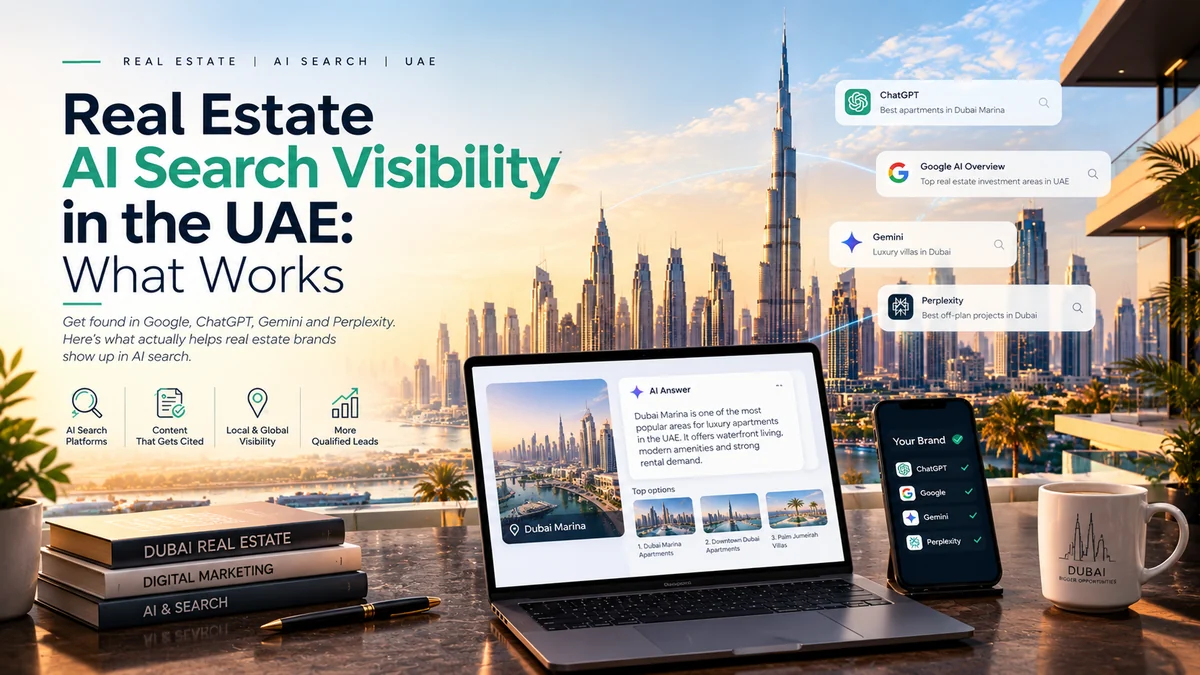
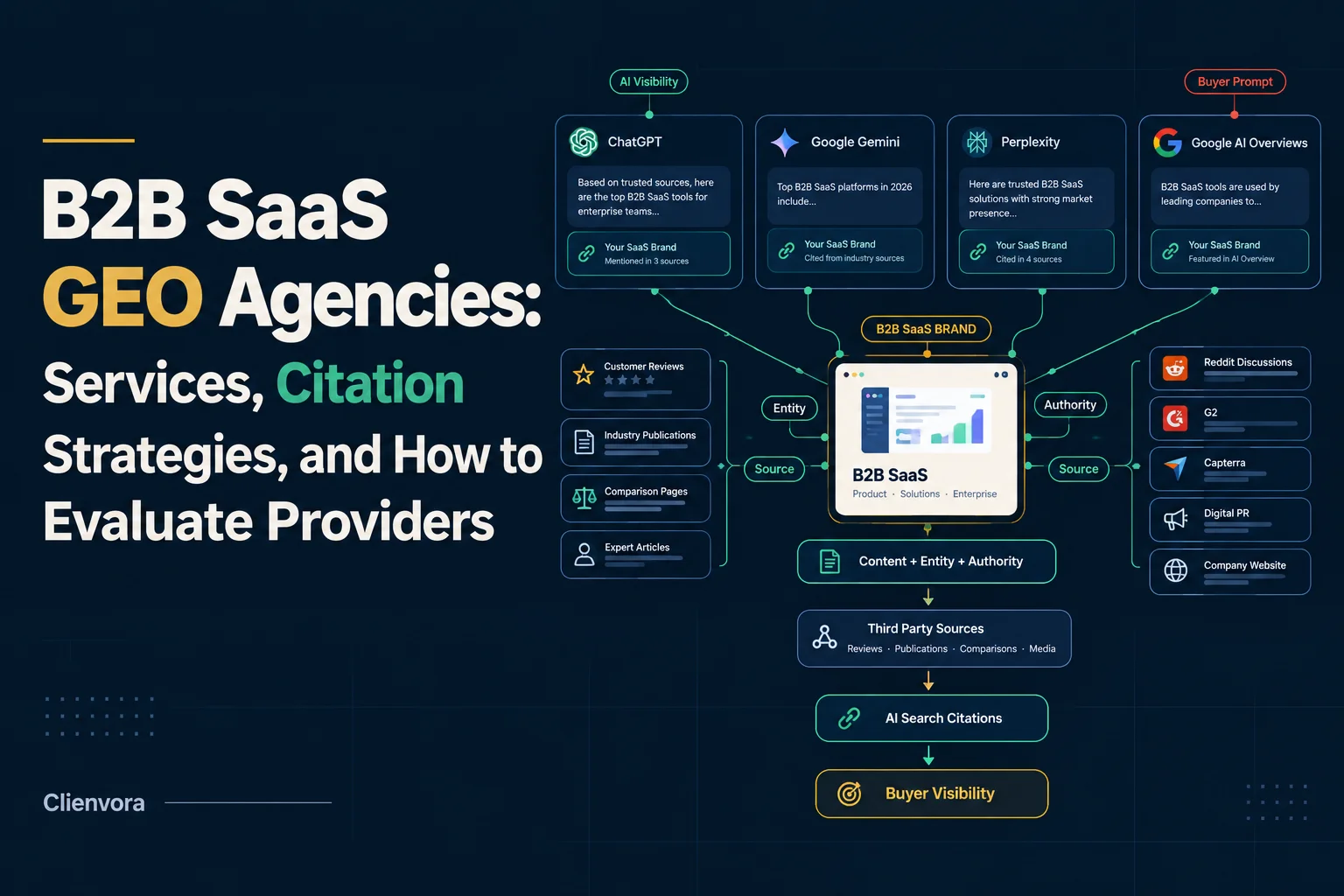
A real estate AI search strategy for example needs different platform weighting than a B2B SaaS playbook: local pack signals matter more for property brands, while Perplexity and Reddit threads carry outsized weight for buyer research queries.
ChatGPT: Authority And Depth
ChatGPT cites 1-3 sources per answer with inline footnotes. It favors Wikipedia (47.9% of citations), authoritative publications, and content with deep coverage. For ChatGPT, invest in long-form guides (2,000-4,000 words) with H2/H3 hierarchy, comparison tables, and explicit external citations.
Perplexity: Freshness And Community
Perplexity cites 6-12 sources per answer with quote blocks and URLs inline. It rewards unique phrasing, freshness cadence, and community presence. Reddit made up 46.7% of Perplexity's top-10 cited sources in Profound's 2025 analysis, though by early 2026 its share of all Perplexity citations had fallen to around 24%. For Perplexity, prioritize content freshness, Reddit engagement, and original data.
Google AI Overviews: Structure And Authority
Google AI Overviews appear on around 21% of keywords and cite 3-6 sources. They favor pages that rank well organically but prioritize structure and extractability. For AI Overviews, implement author pages with credentials, use FAQPage schema, and structure content with answer-first paragraphs.
Voice Assistants: Speakable Schema
Voice assistants like Siri, Alexa, and Google Assistant read answers aloud. They prefer content marked with Speakable schema, which flags specific passages as suitable for text-to-speech. For voice optimization, keep answers under 30 words and mark key passages as Speakable.
Platform Comparison: AEO Strategy By Platform
| Platform | Citations Per Answer | Top Signal | Content Priority | AEO Tactic |
|---|---|---|---|---|
| ChatGPT | 1-3 | Wikipedia + authority | Long-form, in-depth | Entity definitions, source citations |
| Perplexity | 6-12 | Freshness (40%) | Original data, recent updates | 30-day refresh cycle, Reddit presence |
| Google AI Overviews | 3-6 | Organic rank + structure | Answer-first paragraphs | FAQPage schema, Speakable markup |
| Claude | 2-5 | Authoritative tone | Formal, well-cited | Author credentials, technical precision |
For entity optimization and schema implementation, read our entity copywriting guide. For the full technical picture, see our technical SEO audit guide.
Schema Markup For AEO
Structured data is the language AI systems read. Schema markup provides explicit signals about what your content covers, making extraction and citation more likely.
Priority Schema Types
| Schema Type | What It Does | When To Use |
|---|---|---|
| FAQPage | Marks up FAQ content for direct answer extraction | Any page with Q&A sections |
| HowTo | Structures step-by-step instructions for voice and AI | Tutorial and guide content |
| Article | Identifies content type, author, and publication date | All blog posts and articles |
| Speakable | Flags passages for voice assistant text-to-speech | Key definitions and answers |
| Organization | Establishes brand entity for AI recognition | Homepage and about pages |
How To Measure AEO Performance
AEO metrics differ from traditional SEO metrics. You are not tracking rankings here, you are tracking answer inclusion across the engines that cite you.
Featured Snippet Wins
Track how often your content appears in featured snippets and People Also Ask boxes. These are the traditional AEO surfaces. Use Google Search Console to monitor impression and click data for queries that trigger these features.
AI Citation Rate
Test your target prompts across ChatGPT, Perplexity, and Google AI Overviews weekly. Record whether your brand appears, how it's described, and which competitors are cited instead. Most companies start at 5-15% citation rate and can reach 40-50% within 6 months.
Voice Assistant Selection
Test voice queries on Siri, Alexa, and Google Assistant for your target questions. Record which sources they read aloud. Voice optimization is harder to track but increasingly important as voice search grows.
Zero-Click Impression Share
Monitor queries where AI Overviews appear above your listing. Track impression share for these queries separately. Even if users don't click, brand impressions in AI Overviews build awareness and credibility.
AEO Metrics Scorecard
| Metric | How to Measure | Target Benchmark |
|---|---|---|
| Featured snippet wins | Google Search Console "Search features" | 15-25% of target queries |
| AI citation rate | Brand mentions / total queries tested | 30-50% (top quartile) |
| Passage extractability | How often first 134 words appear verbatim in AI answers | 40%+ extraction rate |
| Answer accuracy | Correct brand descriptions / total mentions | 90%+ |
| Zero-click impressions | GSC impressions for AI Overview queries | 10-20% of total impressions |
Run the same 15-20 prompts across ChatGPT, Perplexity, and Google AI Overviews weekly. Record citation count, position, and sentiment for each engine separately. The ratio between them is your diagnostic. A brand with 30 Perplexity citations and 2 ChatGPT citations is winning on freshness but losing on authority.
For the full measurement framework, combine AEO tracking with the technical metrics in our technical SEO audit guide and the authority metrics in our GEO guide. For the end-to-end citation process across ChatGPT and Google AI Overviews, follow our step-by-step citation guide.
Want to Be the Source AI Answers Cite?
Our AI search optimization services structure your content for extractability across ChatGPT, Perplexity, and Google AI Overviews.
Get Cited in AI AnswersFrequently Asked Questions
Is AEO the same as GEO?
No. AEO focuses on making content easy for AI to extract a direct answer from. GEO focuses on earning enough trust to be cited when AI generates that answer. AEO helps AI answer the question. GEO helps AI decide who to quote. Both work together. See our GEO guide for the full breakdown.
Is AEO replacing SEO?
No. AEO builds on SEO foundations. Without crawlable, fast, well-structured pages, AEO has nothing to optimize. SEO captures traffic from traditional search results. AEO captures visibility from AI-generated answers. Start with technical SEO, then layer AEO on top.
How long does AEO take to show results?
AEO typically shows results faster than traditional SEO. Featured snippet wins can appear within 2-4 weeks. AI citation improvements can appear within 2-6 weeks. Significant, consistent presence develops over 3-6 months. Companies that implement all 7 steps together see results faster than those that pick one or two.
Do I need technical skills for AEO?
Basic AEO optimization (answer-first writing, question headings) requires no technical skills. Schema markup and llms.txt setup require some development knowledge. Measuring AEO performance across platforms requires manual testing or specialized tools. If you need help, request a free AEO audit. For full AI search visibility across ChatGPT, Perplexity, and AI Overviews, see our AI search optimization services.
Which platforms should I optimize for first?
Start with Google AI Overviews and featured snippets. These cover the majority of traditional search traffic. Then expand to ChatGPT and Perplexity. Voice assistants are a lower priority unless your audience uses voice search frequently. Our copywriting for AI search guide covers content-level optimization across all platforms.
What industries benefit most from AEO?
Any industry where prospects ask AI questions before buying benefits from AEO. B2B SaaS, professional services, healthcare, financial services, legal, and ecommerce see the biggest impact. For the ecommerce-specific AEO strategy, see our ecommerce SEO services. Local businesses also benefit when customers ask AI for "best [service] near me" recommendations.
AEO In Action: What The Numbers Show
Here is what businesses see when they implement AEO properly, with the figures that show how answer inclusion changes once the structure is in place.
| Industry | Before AEO | After AEO (6 months) | Key Tactic |
|---|---|---|---|
| B2B SaaS | 0 featured snippets | 12 featured snippets + 3 AI Overview citations | Answer-first headings + FAQPage schema |
| Professional services | Not cited by AI | Cited in 4/5 category queries | Speakable schema + authority content |
| Ecommerce | 5% AI citation rate | 35% AI citation rate | Product comparison passages + schema |
| Local business | 0 voice search visibility | Featured in "best near me" voice queries | Speakable schema + local entity optimization |
These are typical ranges from documented case studies across multiple industries. Your results depend on competition, current authority, and implementation quality. Want to see what's possible for your specific business? Get a free AEO assessment.
Related Resources
These posts cover the mechanics behind this guide: how AEO differs from GEO, how entity structure makes a page citable, and how to measure answer inclusion over time.